



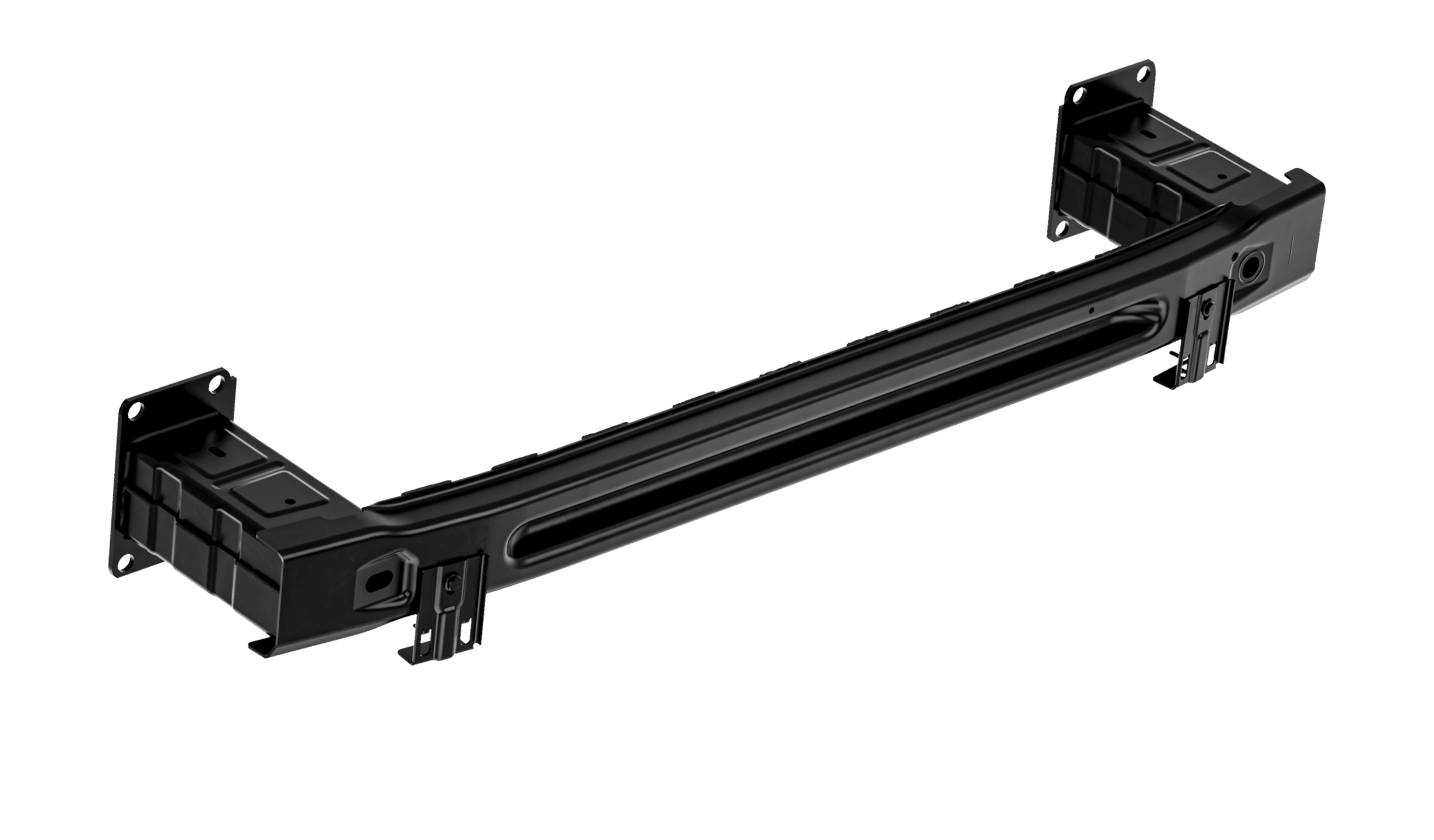
REAR BUMPERS ASSY
The rear bumper assembly is a structural and protective component located at the back end of the vehicle. It forms part of the Crash Management System (CMS) and is designed to absorb impact energy in the event of rear-end collisions while also supporting various functional elements.
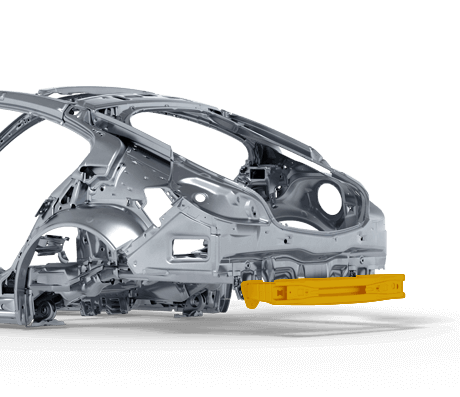
It serves several critical functions:
- Impact energy absorption: Reduces damage to the vehicle’s body and internal systems during low- and high-speed rear impacts.
- Crash management: Helps distribute and dissipate crash forces to minimize intrusion into the rear structure and passenger compartment.
- Mounting point: Serves as mounting fot tow eye hook and support for parking sensors, cameras, etc.
The rear bumper assembly typically consists of multiple components, including a bumper beam (mainly made from high-strength steel or aluminum), energy-absorbing materials crash boxes, and an extra mounting elements like brackets or plates. These elements are manufactured using processes such as cold/hot forming (for metal beams), spot/arc welding and e-coating at the end.
This component
is manufactured and assembled
using technologies such as:

Hot Stamping

Laser Cutting

Cold Stamping

Arc (MAG) welding

T-stud welding

E-coat

CMS SYSTEMS
The Crash Management System (CMS) is a structural system integrated into a vehicle's front and rear end, designed to manage and absorb impact energy during a collision, reduce the damage to the vehicle's main structure, enhance occupant protection, and improve crashworthiness.
These components made and joined using technologies such as:
- Bumper beam (front and rear)
- Crash box (located between the bumper beam and vehicle frame)
- Mounting brackets and reinforcements
These components made and joined using technologies such as: Hot Stamping, Cold forming, Arc welding, Spot welding, Riveting, E-Coat, Extrusion (for high-strength materials in the bumper beam)
The BIW structure ensures vehicle stifness, crash safety, dimensional accuracy, and provides the base for further assembly and surface finishing processes.