



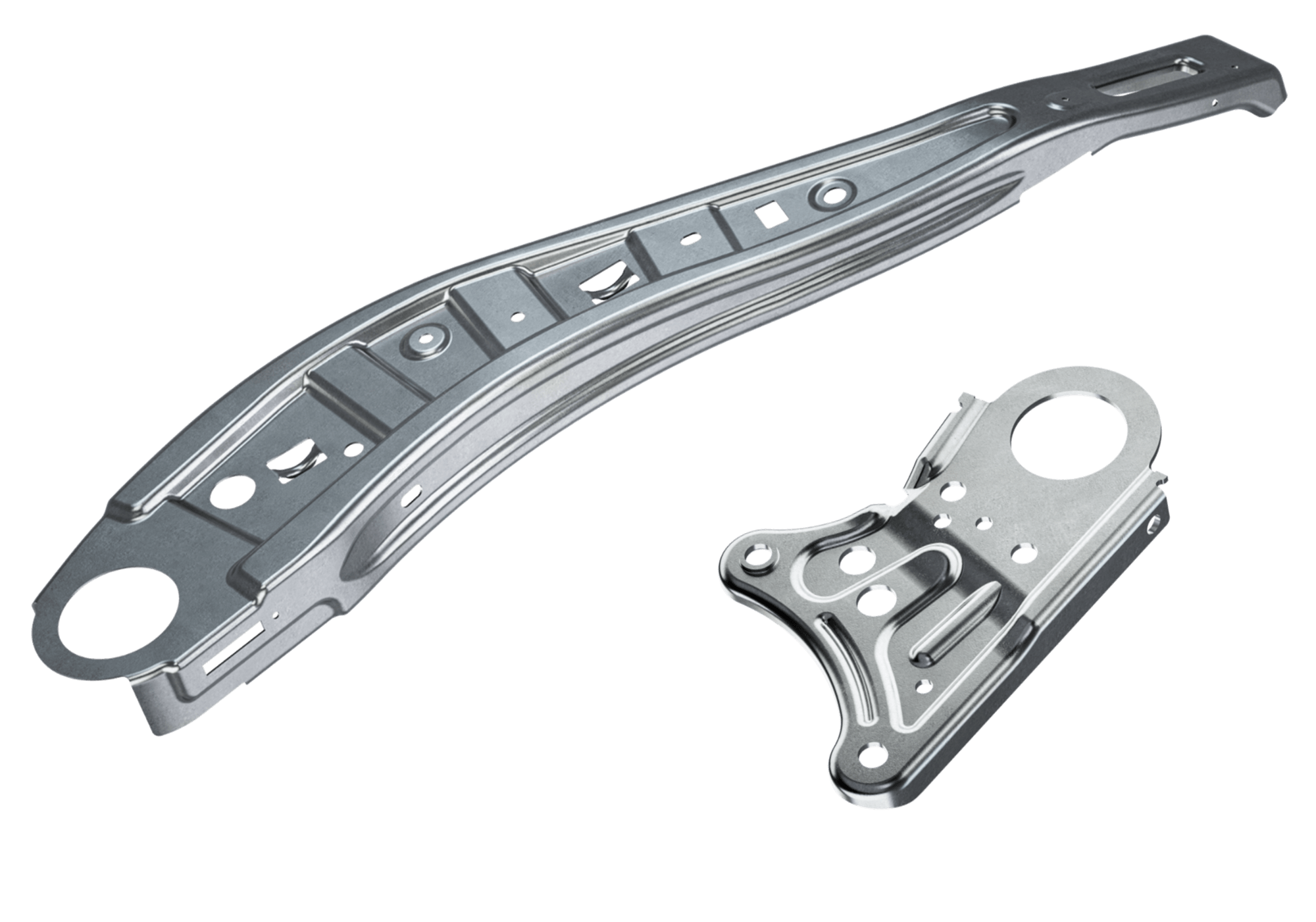
SINGLE STAMPINGS
Single Stampings used within the Seating Elements system are individual, non-assembled metal components formed from flat sheet material, designed to support, mount, or reinforce specific areas of the vehicle's seat structure. These parts are typically integrated into the seat module area.
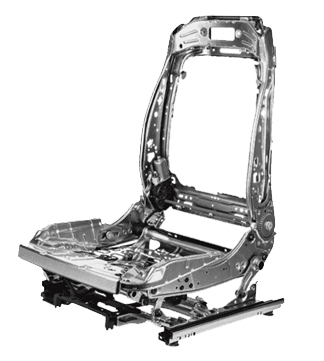
It serves several critical functions:
- Seat structure integration: Provide localized reinforcement or connection points for seat tracks, brackets, or seatbelt anchors.
- Crash performance: Improve energy absorption and load transfer in the event of a frontal or side impact.
- Mounting accuracy: Ensure proper alignment and stability of seats through precise geometry and tolerance control.
- Stiffness and support: Increase local structural rigidity in areas subject to high dynamic loads from seat occupants.
These components are generally manufactured from high-strength steel or tailored blanks using cold stamping processes. Post-stamping operations may include trimming, piercing, projection welding of nuts or studs, and surface treatments such as oiling or e-coating.
This components
are manufactured and assembled
using technologies such as:

Cold Stamping

In-die clinching

In-die tapping

E-coat
SEATING ELEMENTS
Seating Elements are structural and functional components integrated into the vehicle’s body-in-white (BIW) that serve as the foundation for mounting, supporting, and securing driver and passengers seats. Mandatory features are safety, ergonomics, and comfort, especially in crash scenarios.
Seating elements typically include the following components:
Front and rear seat crossmembers, Seat mounting brackets and reinforcements, Floor pan seat interfaces, Backrest reinforcement areas, Seatbelt anchorage reinforcements
These components are manufactured and assembled using technologies such as:
Cold forming. Spot welding and arc welding (for structural joining), Machining, Projection welding, E-Coating
Seating elements play a critical role in occupant safety by securely anchoring the seat structure and seatbelts, transferring loads during collisions, and ensuring the integrity of restraint systems.