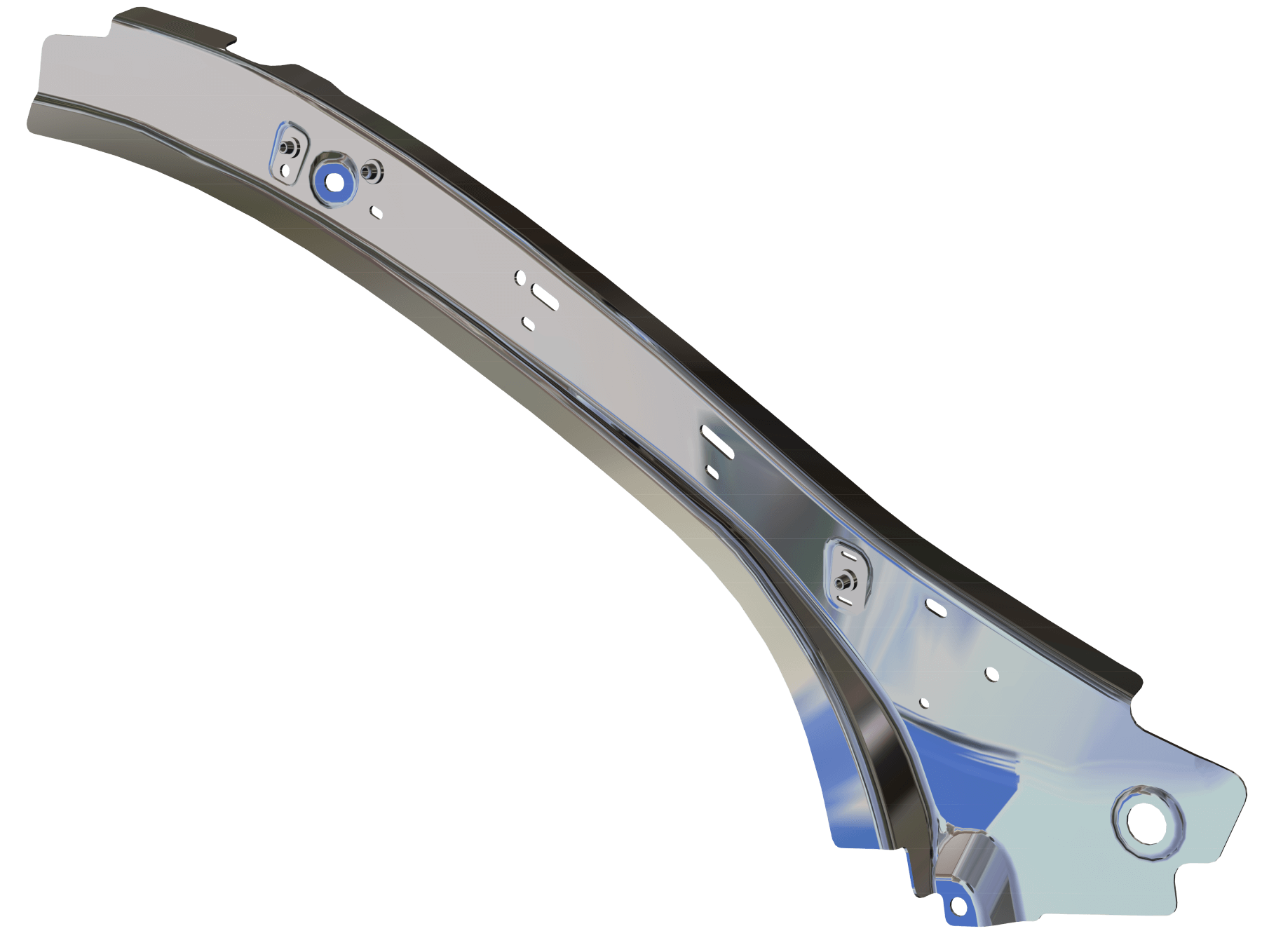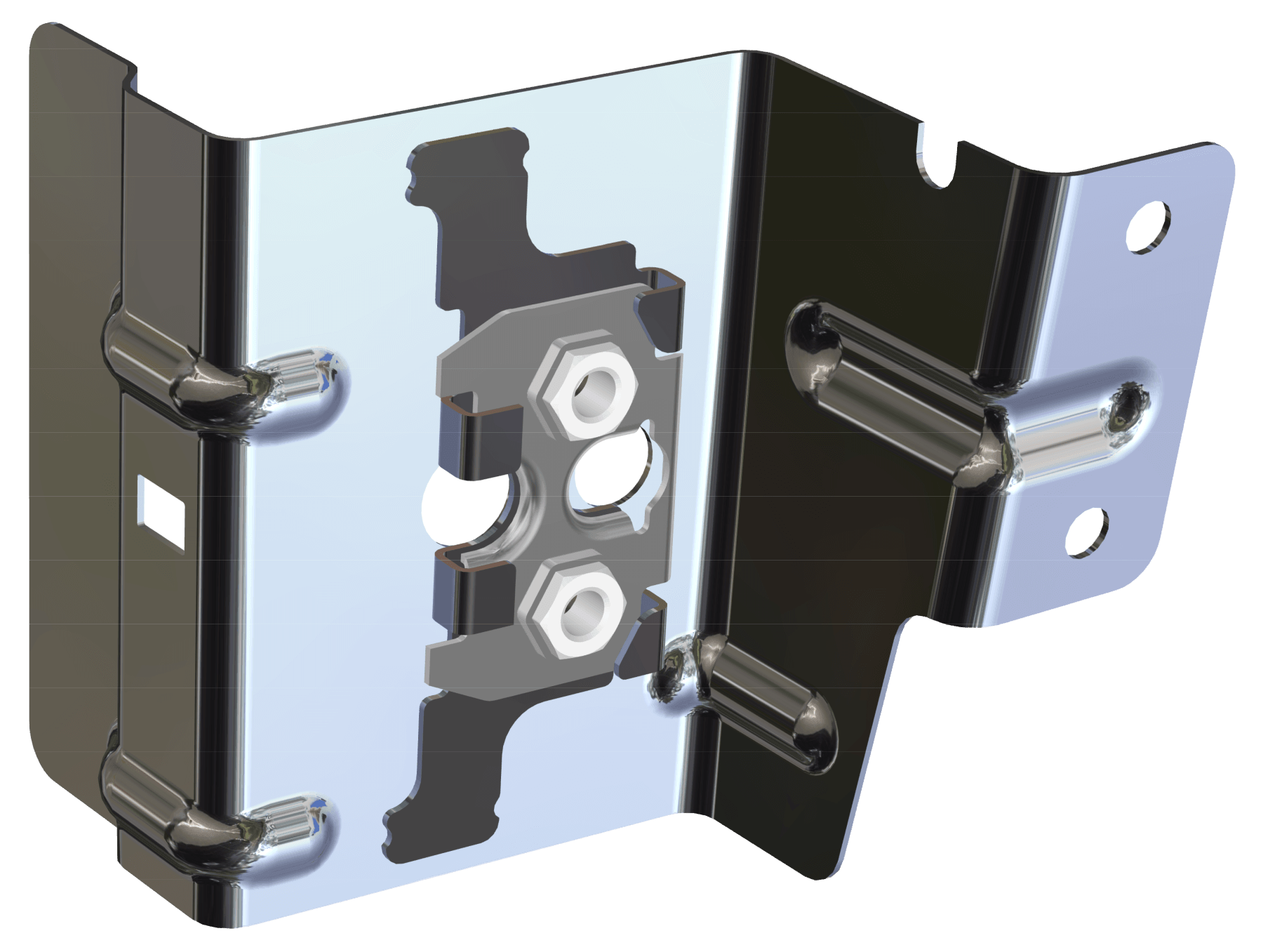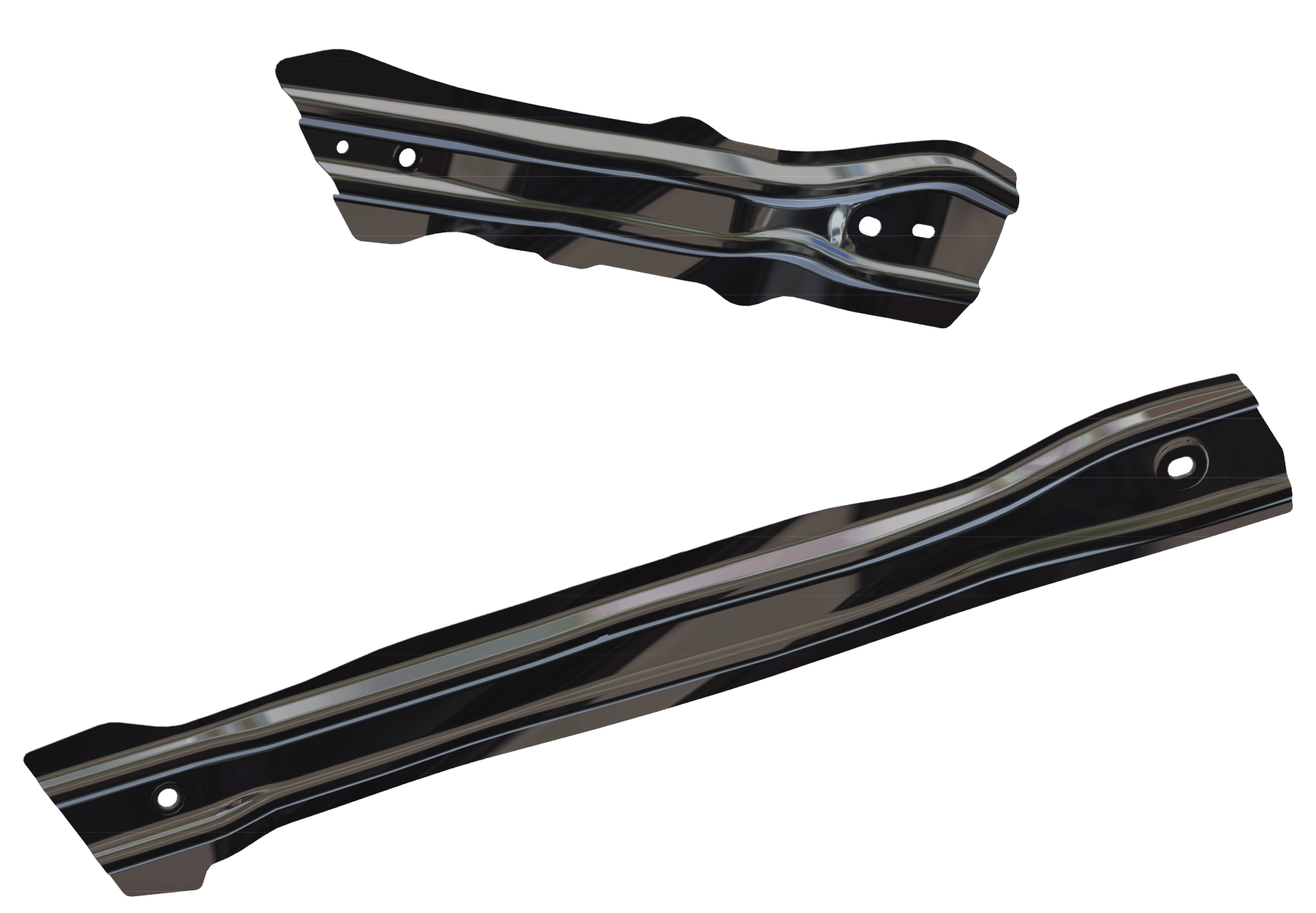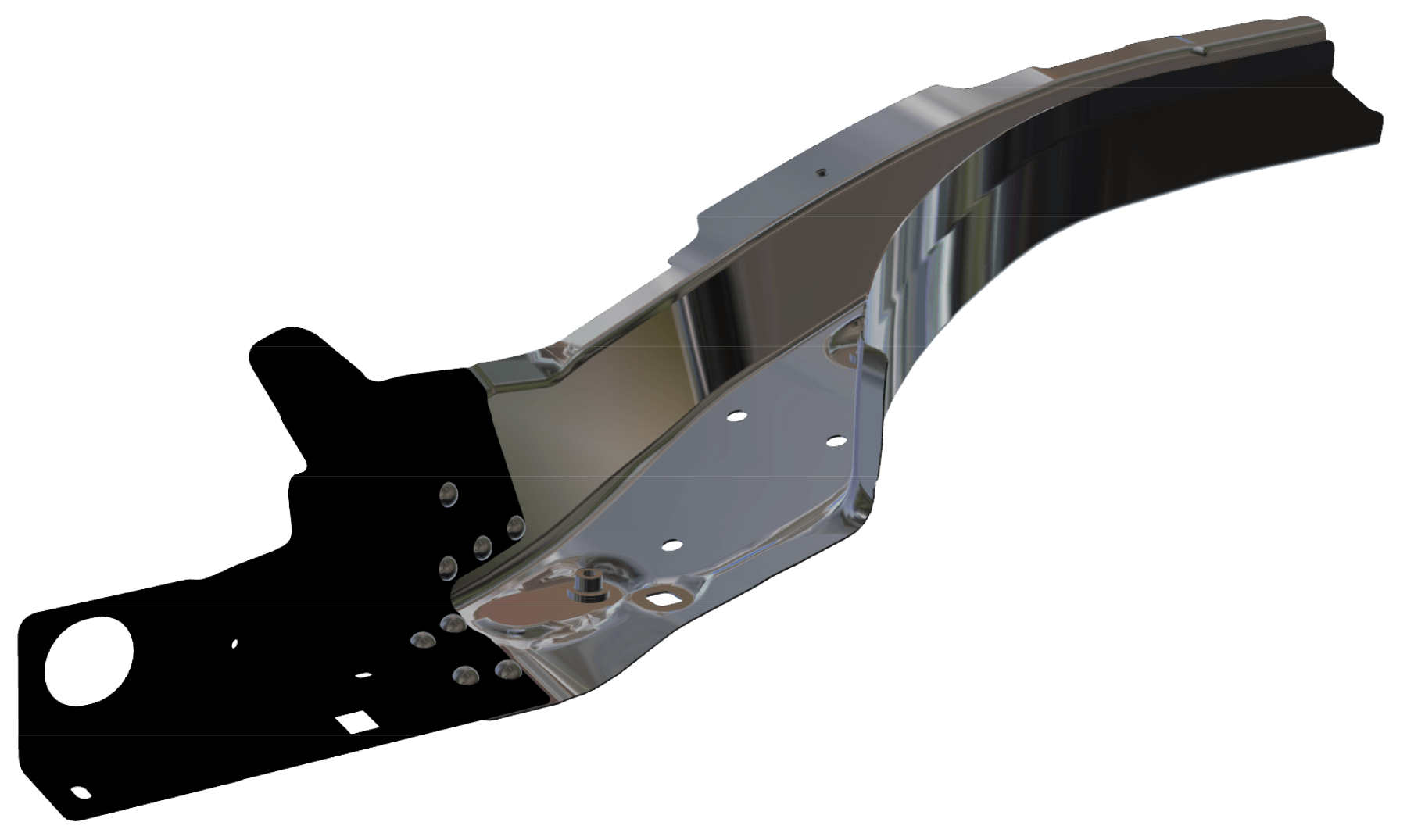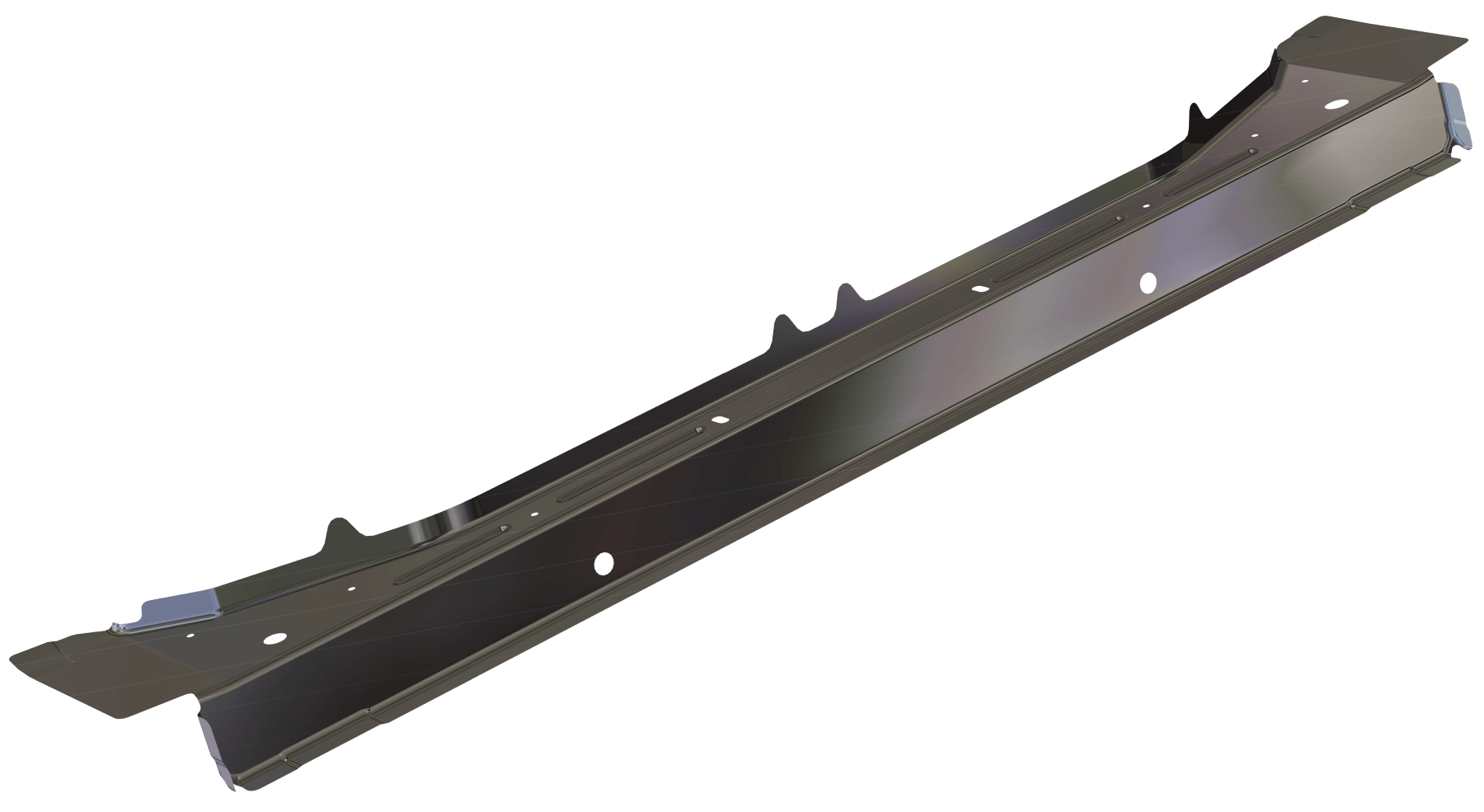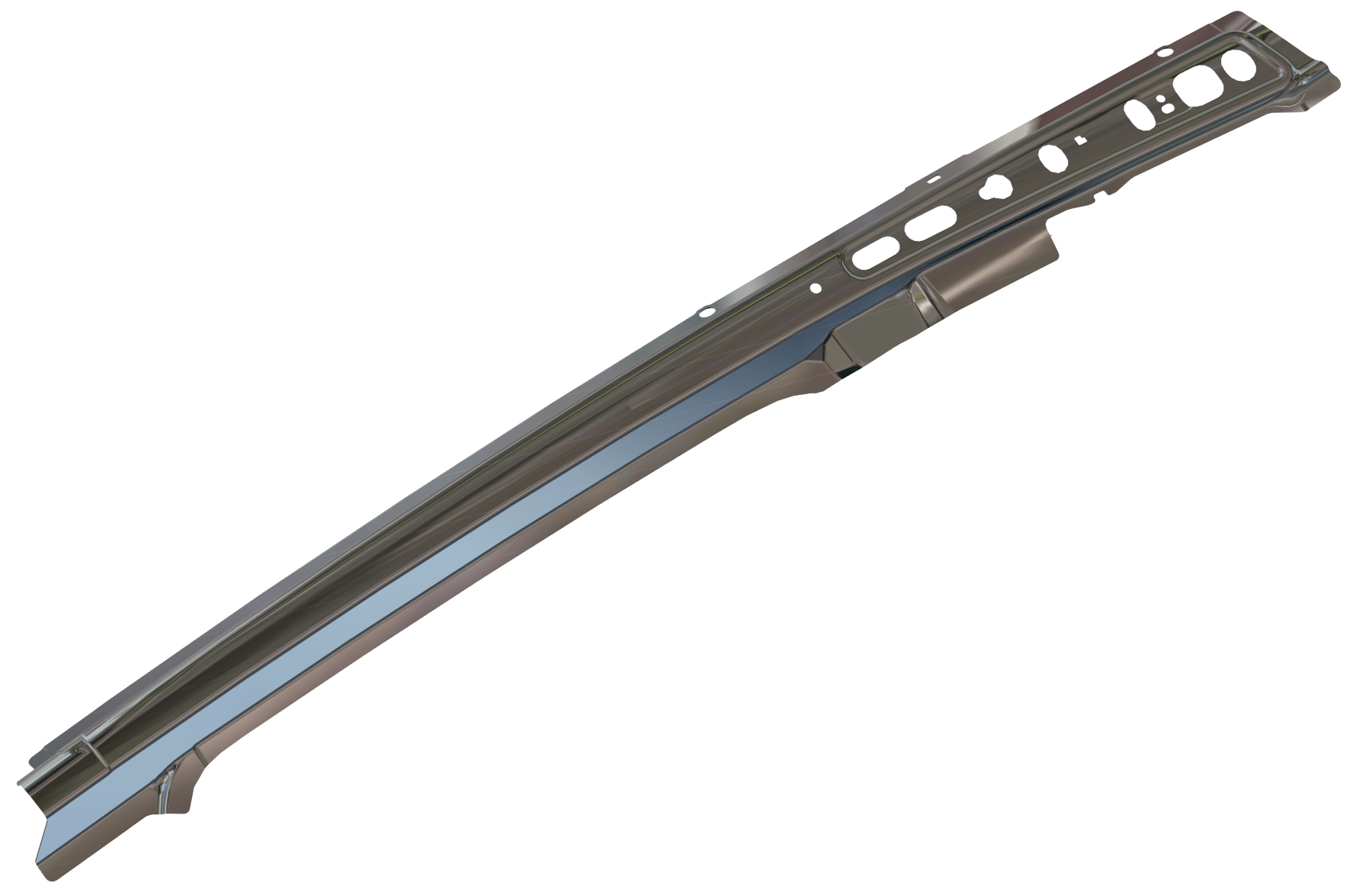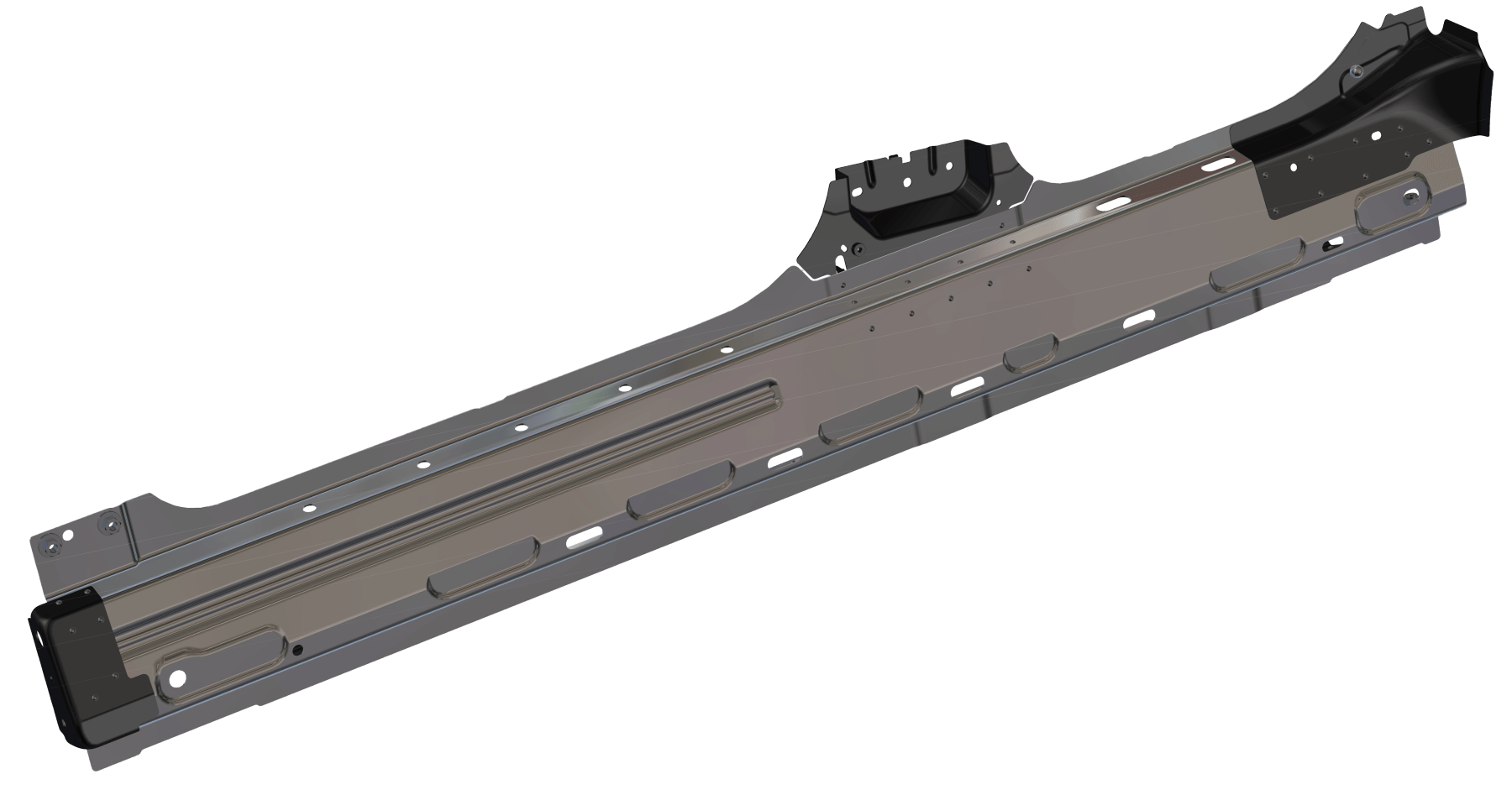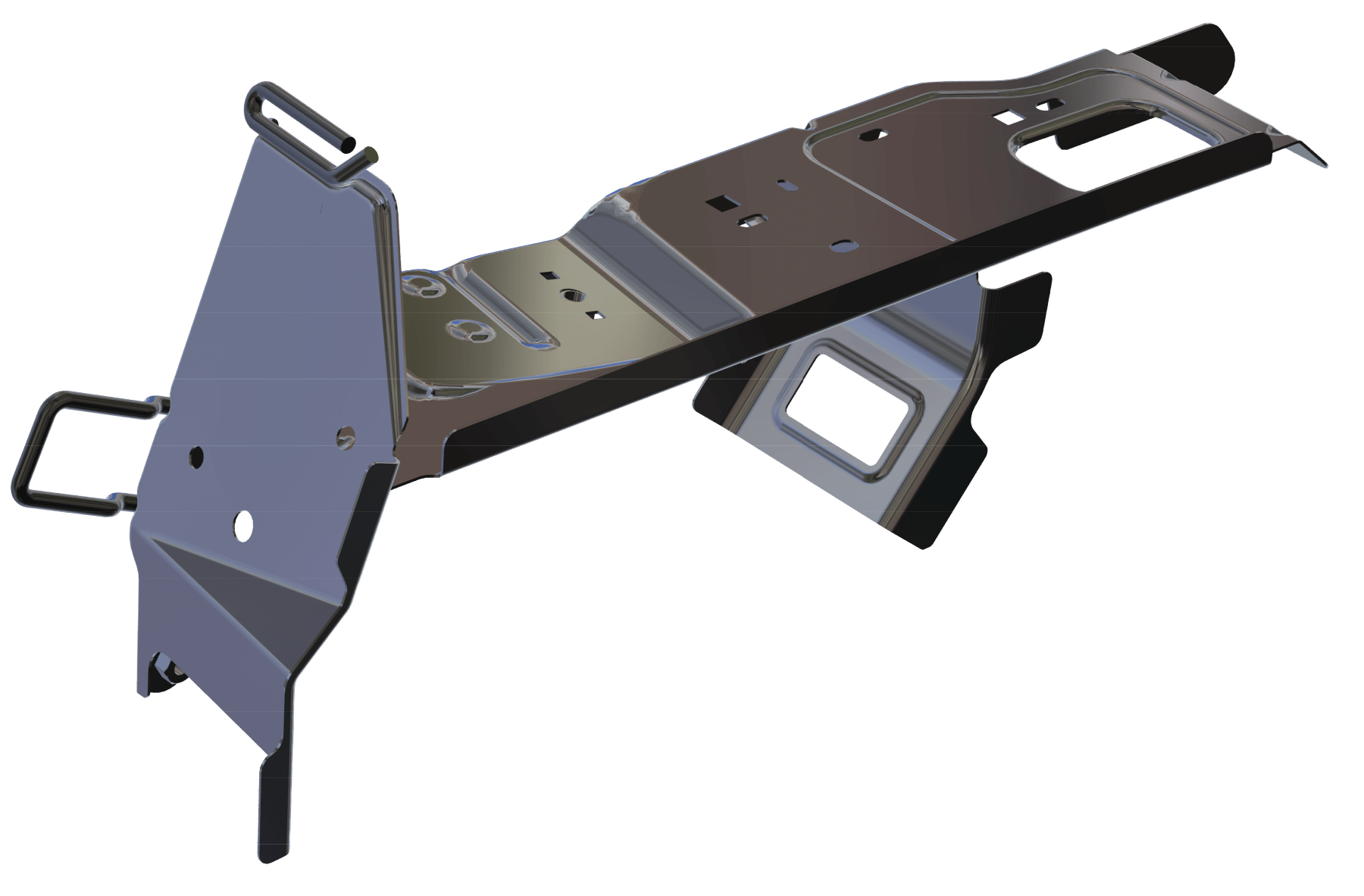



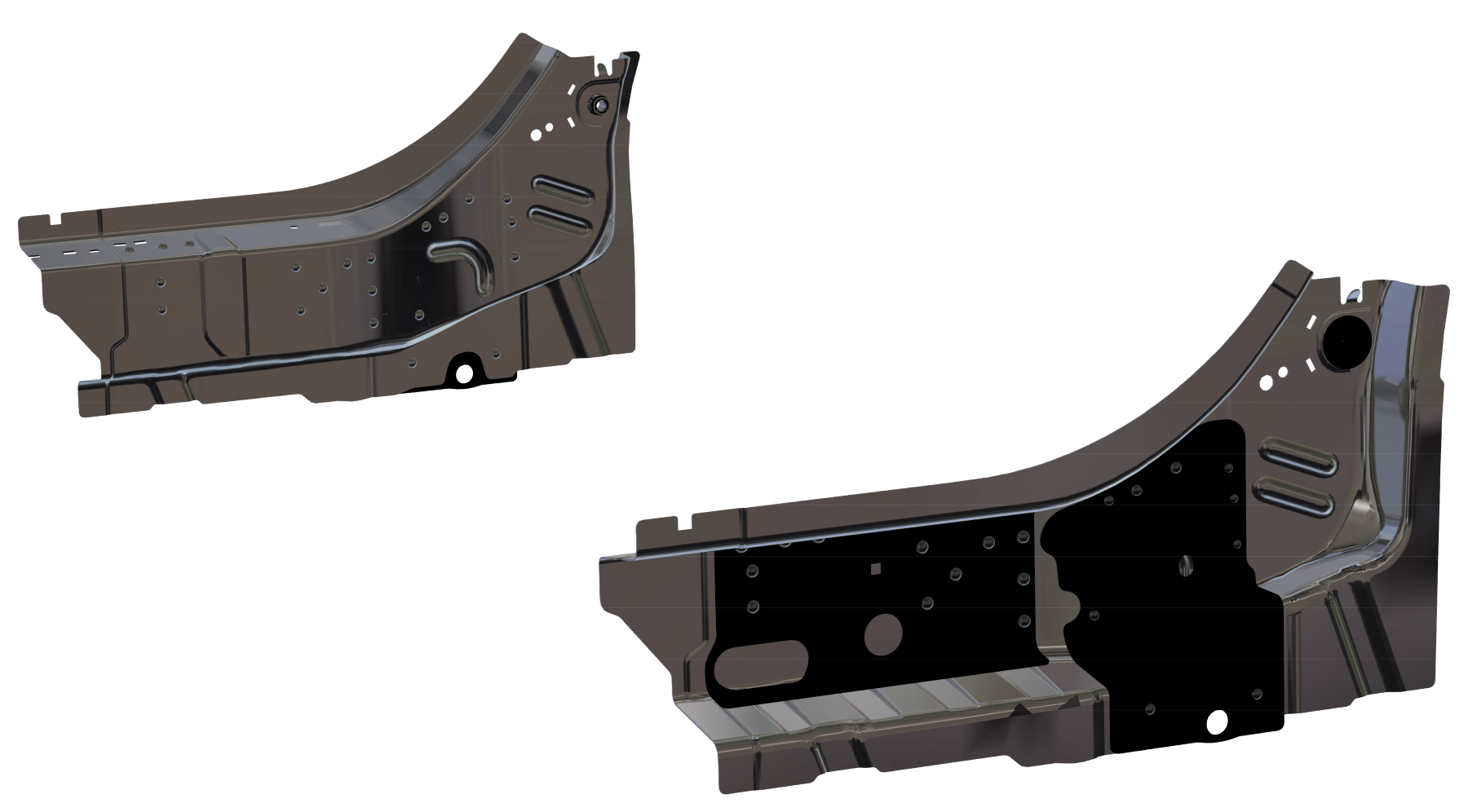
INNER SILL REAR ASSY
The inner sill rear assembly is an internal structural component located at the rear section of the vehicle’s sill (rocker panel), forming part of the side body structure in the body-in-white (BIW). Positioned beneath the rear door or quarter panel area, it connects the side sill to adjacent floor and wheelhouse structures.
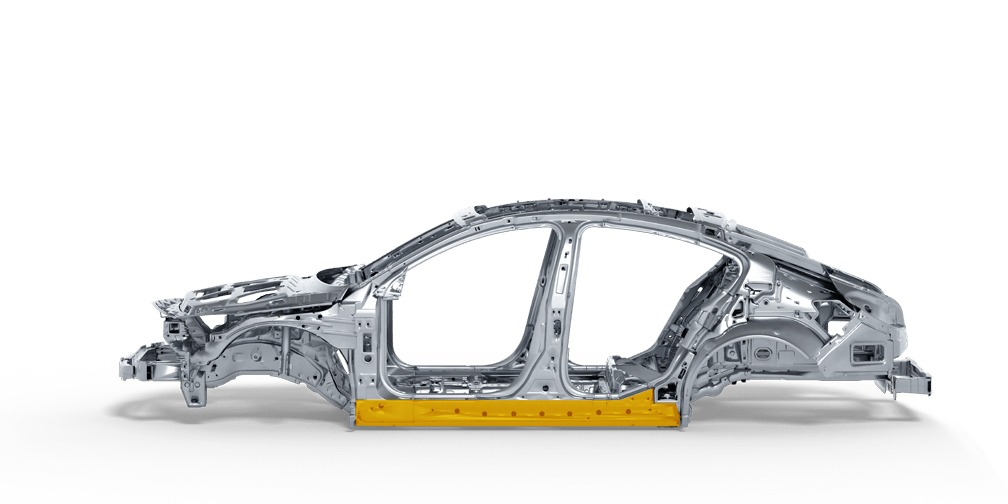
It serves several critical functions:
-
Structural reinforcement: Strengthens the rear portion of the sill assembly, contributing to overall side stiffness and resistance to deformation.
-
Crash performance: Helps manage energy during side and rear-side impacts, working in conjunction with the outer sill and floor reinforcements.
-
Load transfer: Diverce forces between the rear suspension mounts, side sill, and floorpan during normal operation or crash events.
-
Mounting interface: Serves as a foundation for attaching trim panels, sealant paths, or additional reinforcements like gussets or brackets.
-
Corrosion protection and sealing: Often designed with drain paths, sealant application zones, or anti-corrosion coatings to protect the internal cavity from environmental damage.
The inner sill rear assembly is typically manufactured from high-strength steel through cold stamping processes. Depending on the vehicle’s structural requirements, it may include spot-welded reinforcements, localized thickness variations, or tailored blanks to optimize performance in critical zones.
This component
is manufactured and assembled
using technologies such as:

Hot Stamping

Laser cutting

Cold Stamping

Projection welding
Spot welding

Glueing application
BODY IN WHITE
Body in White (BIW) is the stage in automotive manufacturing where the vehicle’s sheet metal structure (body) is fully assembled.
BIW includes the main structural and outer body components such as:
floor pan, roof, side panels, front and rear aprons, pillars (A, B, C), door frames, hood and trunk lid (if pre-assembled).
These components made and joined using technologies such as:
hot and cold forming, spot welding, laser cutting, MIG/MAG welding, laser welding, riveting, adhesive bonding.
The BIW structure ensures vehicle stifness, crash safety, dimensional accuracy, and provides the base for further assembly and surface finishing processes.